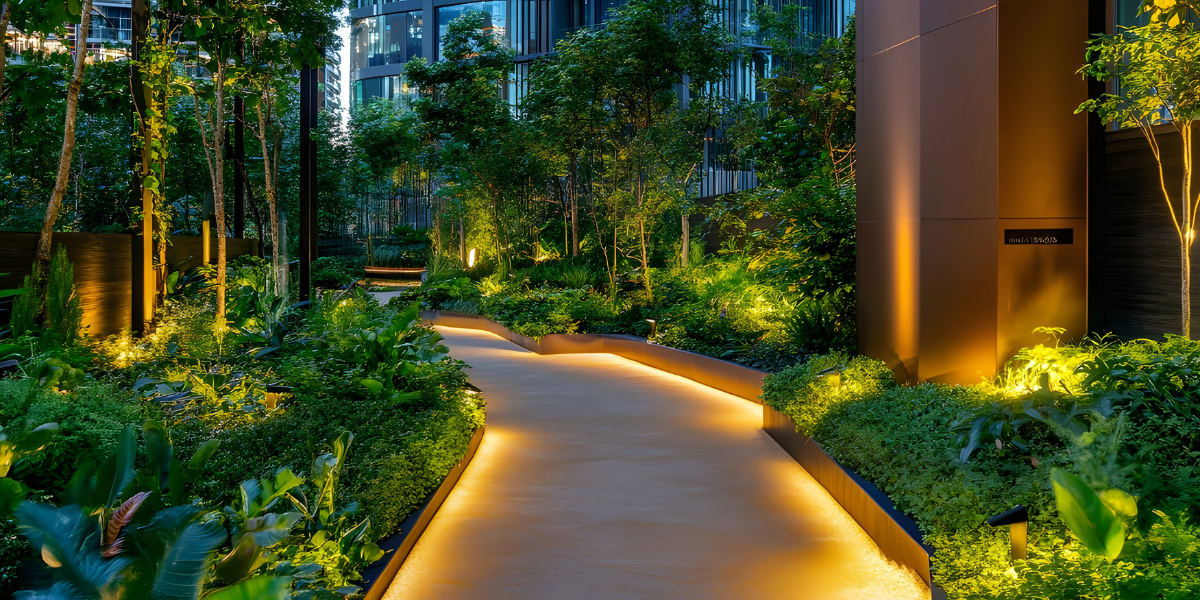
Your home’s exterior makes a powerful first impression but what happens after the sun goes down? Without the right lighting, even the most beautifully landscaped yard fades into the dark. Thoughtful residential landscape lighting transforms your property after sunset, highlighting your home’s best architectural features, illuminating pathways for safety, and creating an inviting ambiance that neighbors and guests will admire. Whether you’re refreshing an existing setup or starting from scratch, these ideas will help you take your curb appeal to the next level.
1. Uplighting: Make Your Trees and Façade Shine
One of the most dramatic and impactful residential landscape lighting techniques is uplighting. By placing fixtures at ground level and angling them upward, you cast light on trees, shrubs, and architectural elements in a way that creates stunning visual depth at night.
For mature trees with broad canopies, try placing LED spotlights at the base and pointing them toward the trunk and branches. The shadowing effect on surrounding walls and fences adds natural texture. Similarly, uplighting the front façade of your home focusing on columns, brick detailing, or dormers gives your property a polished, estate-like quality that dramatically boosts curb appeal.
Use warm white LEDs (around 2700K–3000K) for a natural, inviting glow rather than a harsh, blue-toned light that can feel clinical or industrial.
2. Pathway Lighting: Guide the Way in Style
Pathway lights serve double duty they’re both functional and decorative. Placed along driveways, walkways, and garden paths, they guide visitors safely from the street to your front door while lending a warm, welcoming glow to your landscape.
The key to great pathway lighting is spacing and consistency. Fixtures placed too far apart leave dark patches; too close together, and the effect feels cluttered. As a general rule, space pathway lights every 6 to 8 feet for a balanced look. Low-profile bollard lights offer a modern aesthetic, while lantern-style fixtures complement traditional or craftsman architecture.
Solar-powered pathway lights are a budget-friendly option, but professionally installed low-voltage LED systems provide far more consistent light output and longevity important for year-round curb appeal.
3. Downlighting and Moonlighting Effects
While uplighting draws the eye upward, downlighting creates soft, layered illumination that mimics the natural effect of moonlight filtering through tree branches. To achieve this look, mount fixtures high in trees or on tall structures and angle them downward.
Moonlighting is especially beautiful over patios, garden beds, and entry areas. The dappled shadows created by leaves and branches add movement and depth to your landscape no matter the season. Combine downlighting with uplighting in the same tree to create a layered, three-dimensional effect that looks stunning from the street.
4. Accent Lighting for Focal Points and Garden Features
Every well-designed landscape has focal points a statement sculpture, a water feature, a specimen plant, or a dramatic rock formation. Accent lighting draws attention to these features after dark, ensuring your landscape looks as intentional at 9 PM as it does at noon.
Use adjustable spotlights or well lights to pinpoint these elements with precision. For water features like fountains or ponds, consider submersible LED fixtures that illuminate the water itself from within. The result is a glowing, jewel-like effect that becomes an unforgettable focal point when viewed from the street or your living room windows.
Colored lighting can also be used sparingly for accent features a subtle amber or deep blue can add mood and personality without overwhelming the overall design.
5. Silhouetting: Drama Through Contrast
Silhouette lighting is an underused but visually powerful technique in residential landscape lighting design. By placing a light source behind a plant or architectural feature and pointing it at a solid backdrop a fence, a wall, or a hedge you create a striking dark outline against a bright background.
Plants with bold, architectural shapes ornamental grasses, agave, palms, or Japanese maples are ideal candidates for silhouetting. This technique works especially well for homes with clean, modern lines and minimal landscaping, where the contrast of light and shadow creates maximum impact with minimal clutter.
6. Smart Lighting Controls and Automation
Modern residential landscape lighting goes far beyond simple timers. Smart lighting systems allow you to control your entire outdoor lighting design from your smartphone, set automatic schedules tied to sunrise and sunset, and even change colors or brightness levels to suit the season or occasion.
Automated systems mean your landscape is always perfectly lit without any manual effort essential for consistent curb appeal whether you’re home or traveling. Many systems also integrate with home security platforms, making your lighting serve double duty as a deterrent against intruders.
Energy-efficient LED technology means running a comprehensive landscape lighting system costs far less than most homeowners expect often just a few dollars per month in electricity.
7. Why Professional Installation Makes a Difference
DIY landscape lighting kits have their place, but a professionally designed and installed system delivers results that no off-the-shelf kit can replicate. A skilled lighting designer understands beam angles, fixture placement, color temperature layering, and how light interacts with your specific landscape through every season.
Professional installation also means concealed wiring, weatherproof connections, and fixtures that are properly anchored and positioned for long-term performance. For homeowners serious about curb appeal and property value, investing in a custom residential landscape lighting design is one of the highest-return upgrades you can make.
Brite Nites has been designing and installing custom residential landscape lighting across the country since 1993, with over 16,000 successful installations and a team of specialists who approach every property as a unique design challenge.
Ready to see your home in a different light? A professional consultation is the first step toward a landscape lighting design that truly reflects your home’s character and your personal style.
Frequently Asked Questions About Residential Landscape Lighting
Q: How much does residential landscape lighting typically cost?
A: The cost of residential landscape lighting varies widely depending on the size of your property, the number of fixtures, the type of system, and whether you opt for professional installation. A basic pathway and accent lighting setup for an average-sized front yard might start around $1,500–$3,000 professionally installed, while comprehensive systems with smart controls and multiple lighting zones can range from $5,000 to $15,000 or more. The investment typically pays for itself through increased property value, enhanced security, and energy-efficient LED operation.
Q: What is the best type of bulb for outdoor landscape lighting?
A: LED bulbs are the clear choice for residential landscape lighting today. They use up to 80% less energy than traditional halogen or incandescent fixtures, last significantly longer (often 50,000 hours or more), and are available in a wide range of color temperatures to suit any design aesthetic. For a warm, natural look that complements most landscapes and architectural styles, look for LEDs in the 2700K–3000K color temperature range.
Q: How do I choose the right color temperature for my landscape lighting?
A: Color temperature is measured in Kelvin (K). For most residential landscape lighting applications, warm white (2700K–3000K) creates a welcoming, natural ambiance that works beautifully with both plant material and architectural elements. Cool white (4000K–5000K) can work for modern, minimalist designs where a crisp, contemporary look is the goal. Avoid mixing color temperatures throughout your landscape, as inconsistency can make a design look disjointed and unpolished.
Q: Can landscape lighting improve home security?
A: Absolutely. Well-designed residential landscape lighting is one of the most effective and aesthetically pleasing security improvements you can make to your property. Illuminating entry points, driveways, and dark corners around your home eliminates the shadows that intruders rely on. Motion-activated lighting adds another layer of deterrence, while smart lighting systems that can be controlled remotely allow you to simulate occupancy when you’re traveling. Security and beauty are not mutually exclusive a thoughtful lighting design achieves both.
Q: How often does landscape lighting need maintenance?
A: High-quality LED landscape lighting systems require relatively little maintenance compared to older halogen systems. However, regular check-ups ideally twice a year are recommended to clean lenses, check for shifting fixtures (especially after winter freeze-thaw cycles), inspect wiring and connections, and adjust timer settings for seasonal changes in daylight hours. Professional maintenance plans ensure your system always performs at its best and can extend the life of your investment significantly.
Q: Is low-voltage landscape lighting safe and weatherproof?
A: Yes. Most professionally installed residential landscape lighting systems use low-voltage (12V) systems that are inherently safer than line-voltage alternatives, posing minimal risk even if a wire is accidentally cut or damaged during gardening. Quality outdoor fixtures are rated for weather exposure (look for IP65 or higher ratings), meaning they are dust-tight and protected against water jets. A professionally installed system with proper connectors, conduit where needed, and appropriate fixture ratings will reliably perform through rain, snow, heat, and cold for many years.